New publication from Zhang et al. in Ecology Letters: Species Assembly Is Lineage Specific: Phylogenetic Divergent Species Aggregate in Some Lineages but Segregate in Others
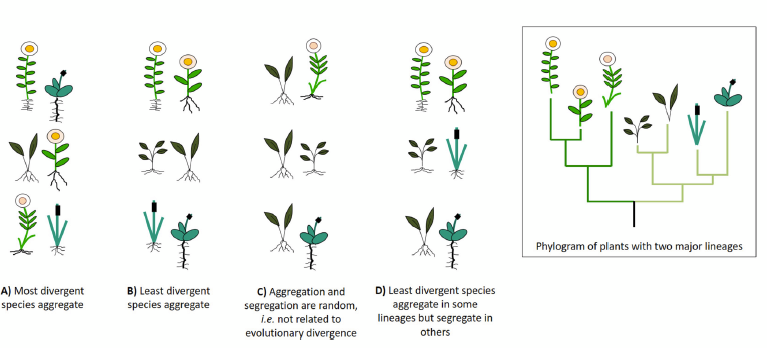
Phylogenetic divergence between species may weaken both negative and positive biotic interactions. Whether, as a result, divergent species aggregate or segregate remains unclear. These interactions differ among lineages, and without immigration, the effects of interactions might be overridden by dispersal limitation. We studied changes in co-occurrence across 5 years for 1770 pairs of grassland species drawn primarily from four major lineages (families), reducing dispersal limitation by seed addition. Across all lineages, changes in co-occurrence were almost unrelated to phylogenetic divergence, partly reflecting opposing relationships within two groups of families: Fabaceae/Poaceae, where more divergent species segregated, versus Asteraceae/Apiaceae, where they aggregated. Dispersal limitation through lack of immigration existed, without eliminating divergence effects. We conclude that species assembly differed between major lineages, with spatial aggregation in Asteraceae/Apiaceae possibly reflecting limiting similarity, whereas segregation in Fabaceae/Poaceae may reflect mutualist incompatibility or asymmetric competition. These processes could feedback on within-lineage diversification.
Reference:
Zhang, K., A. J. Fergus, L. Barbe, B. Schmid, E. Allan, et al. 2026. Species Assembly Is Lineage Specific: Phylogenetic Divergent Species Aggregate in Some Lineages but Segregate in Others. Ecology Letters 29:e70402. https://doi.org/10.1111/ele.70402.